Traditional Craft
Hanji, The Material We Forgot
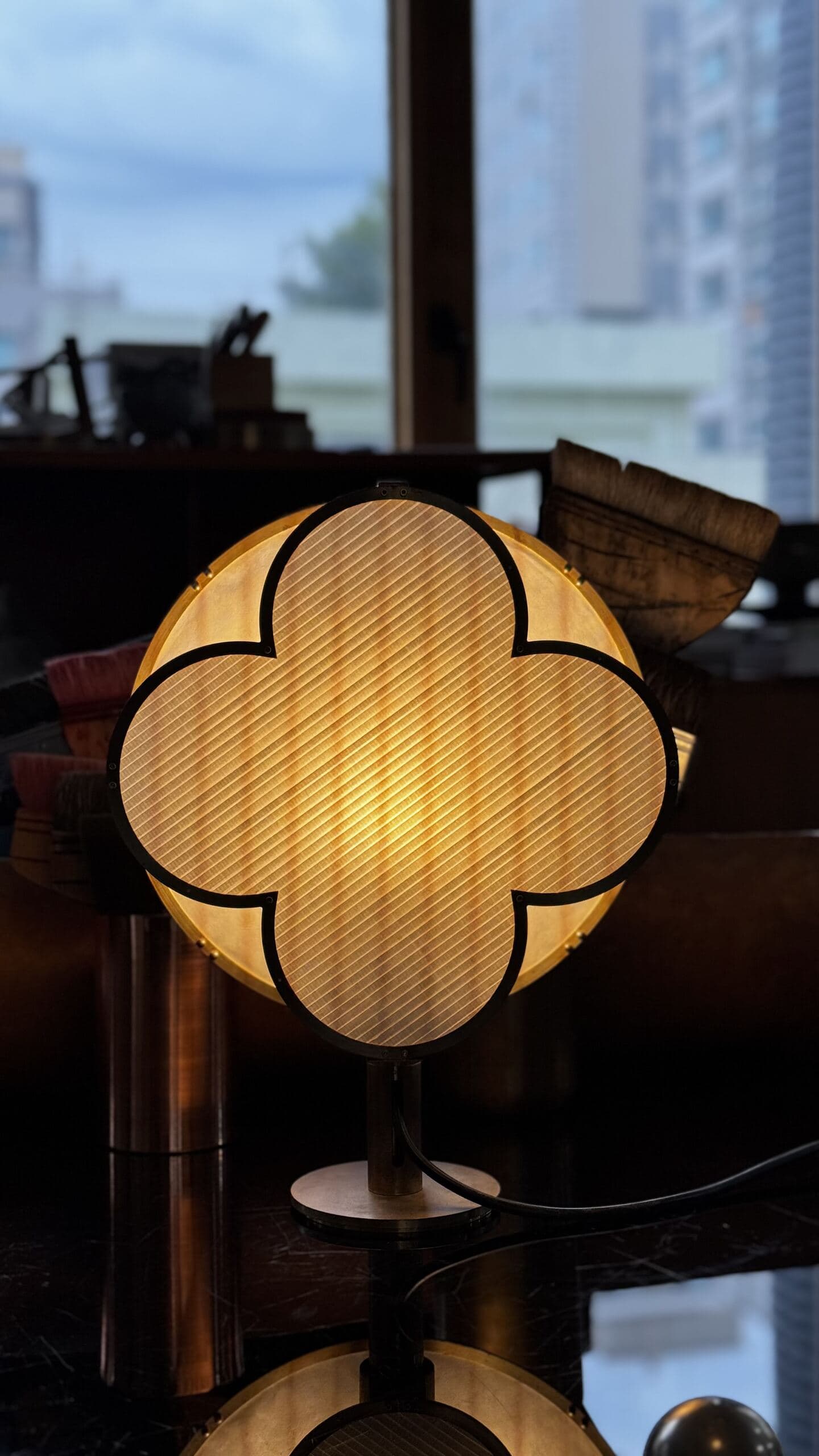
This time, Joseon Yangban visited the studio of Jungmo Kwon, a designer who works with hanji(traditional Korean paper) as a vessel for light. The studio unfolded with shelves and surfaces filled with hanji he had gathered, alongside the pieces he had made from them. It wasn't simply a cluttered workspace. The whole room carried the weight of someone who had spent a long time looking closely at one thing. Just being inside it, you could feel the warmth that hanji holds as a material.
Hanji is Korea's traditional handmade paper, crafted from the inner bark of the mulberry tree. Its durability is recognized on a global level - it is said to last a thousand years. The Mugujeonggwang Daedaranigyeong, a Buddhist scripture discovered inside the Seokgatap Pagoda at Bulguksa Temple in Gyeongju, was printed on hanji in the 8th century and is considered the world's oldest surviving woodblock-printed document. A piece of paper that endured more than a millennium. Hanji was never just a writing surface. It covered windows as hanji paper screens, lined floors as ondol flooring paper, and was shaped into furniture, clothing, umbrellas, and fans. Our ancestors lived surrounded by it.
Hanji was daily life. It was culture in material form. Somewhere along the way, it drifted from that everyday presence. Factory-made paper took its place, and hanji came to feel like something reserved for special occasions, preserved under the label of traditional craft, but no longer truly lived with. Jungmo Kwon is someone who stepped away from that current.
The Studio
The Person Who Captures Light in Hanji
Artist: Jungmo Kwon
Having studied industrial design in Spain, he told us he spent a long time asking himself what he could offer as a designer, what would set him apart. Living abroad, he found himself looking back toward Korea, and naturally his eye moved toward traditional Korean materials. Hanji became the center of that. At first, he said, he wasn't sure what to do with it. Then he found his answer in light. Hanji allows light to pass through it — the irregular grain of mulberry fibers lets light seep in, and where it meets the texture of the paper, something soft and warm is created. That became the starting point of his work.
Hanji is a material that changes entirely depending on who makes it and how. Where the mulberry tree was grown, what water was used, how the artisan beat and lifted the fibers — all of it shapes a sheet of hanji into something distinct. Jungmo Kwon pulled out hanji made by different artisans and invited us to touch each one. Some were rough and coarse; others were remarkably fine. Some were so thin they felt less like paper and more like a specialized textile. We had seen hanji before, of course but laying them side by side like this, each one suddenly looked different. Hanji felt new.
Inside the Workshop
In the way he spoke about it, there was a quiet urgency: a hope that more people would come to truly see hanji for what it is, and that a proper system could be built to sustain the craft, so that those who make it with genuine dedication can keep doing so. It was less a wish than a conviction, coming from someone who has spent a long time with this material.
Hanji Material Variations
Ottchil-Treated Hanji
We also saw the papers he had worked on with ottchil — traditional Korean lacquer — revealing another expression of hanji. Ottchil is made from the refined sap of the lacquer tree, and has been used for thousands of years on wooden ware, furniture, and lacquerware. It is not simply a coating. As it dries, ottchil develops a depth and luster that is unlike anything synthetic, and over time it only grows harder and more beautiful. In those lacquered hanji pieces, the rough, irregular grain of the paper's fibers became more visible beneath the sheen of the lacquer, and the new color that emerged on top created a beauty that felt both natural and deep. There was something in it that felt distinctly Korean — the beauty of the unsmooth, the imperfect. Leaving the studio, we couldn't quite let go of the anticipation of what these lacquered sheets of hanji would become when shaped into light.
The Future
New Light From Old Things
When we asked what he wanted to do next, he said he wanted to keep expanding his territory. Being a designer who makes lighting while ensuring that each piece can stand as a work in its own right - that he said, is the challenge set before him. One of his recent ventures was a collaboration with fashion brand LEBEIGE, where he brought his own distinctive folded patterns to their work, expressing a Korean aesthetic through clothing. It was the kind of move he had described — taking his vision into wider ground.
He also showed us some of his folded hanji pattern work that day. The patterns were so precisely regular they almost looked mechanical and yet there was no way a machine had made them. When we said we couldn't imagine how paper could be made to look like that, he laughed and said: you just have to fold a lot. There are almost certainly weeks and months of quiet, stubborn experimentation behind that easy answer.
His work extends further still. He has used hanji and the light that passes through it to give visual form to things that have no form — time passing, the rhythm of breathing. Through the shifting shadows cast by his lighting and the cadence of breath, the work draws the viewer inward, into a state of ease, and toward an encounter with a beauty that is entirely the piece's own. That light could make you feel something that was what surprised us most.
That was the Jungmo Kwon we met. Someone who knows that hanji is old, and keeps looking for new light inside it anyway. If you're curious about his work, his Instagram account @jungmo_kwon is well worth a visit. If our traditional craft can be reinterpreted like this, finding its way into more corners of everyday life, then perhaps the day will come when we encounter it across the world. Leaving the studio, that felt like a very real possibility.